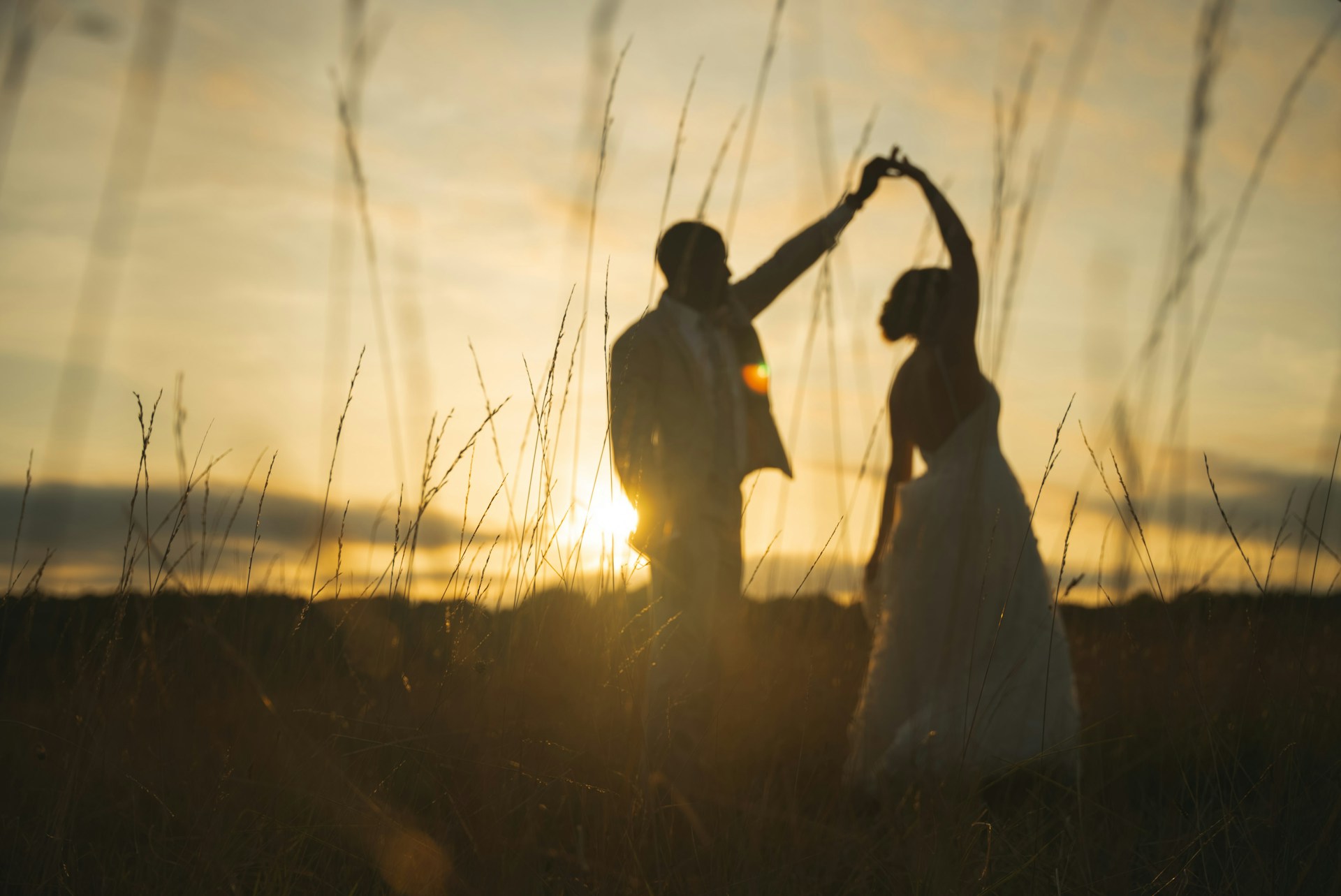
Every couple wants that one shot — the one that makes you gasp when you scroll past it on Instagram. That golden, glowing portrait where time seems to stop. And 9 times out of 10, that image was made during golden hour.
But here's what most couples don't realise: golden hour won't save a bad timeline. And a great timeline can make any light look magical.
After 200+ weddings, here's everything I know about nailing golden-hour portraits without losing your mind — or your dinner hour.
What is golden hour, really?
Golden hour is roughly the last hour before sunset (and the first hour after sunrise, but let's be honest — nobody wants portraits at 5:47 AM on their wedding day).
The light turns warm, directional, and soft. Shadows stretch. Skin glows. It's the closest thing to a free Photoshop filter that nature offers.
But it's not a switch — it's a gradient. The quality of light changes minute by minute, and you want to be in position at least 20 minutes before sunset, not scrambling out of cocktail hour.
The biggest mistake I see
Couples build their timeline around the ceremony and reception — then try to squeeze portraits into whatever gap is left. That's backwards.
Build your timeline around the light.
Here's a simple formula:
- Look up the sunset time for your date and venue.
- Subtract 60 minutes — that's your portrait window start.
- Work backwards from there to schedule everything else.
For a 7:30 PM sunset, that means portraits at 6:30 PM. Which means your ceremony should wrap by 5:45 PM at the latest.
What if my ceremony is at noon?
Then you won't get traditional golden hour, and that's perfectly fine. Overcast midday light is beautifully even and flattering. A skilled photographer can find pockets of gorgeous light at any hour.
The important thing is setting realistic expectations. Don't plan a 2 PM ceremony and then ask for golden-hour portraits — that's a 4+ hour gap that nobody wants.
The 20-minute sweet spot
You don't need a full hour. Honestly, 20 focused minutes during peak golden light will give you more portfolio-worthy images than a rushed 45-minute session in harsh afternoon sun.
Here's what I aim for:
| Time Before Sunset | Light Quality | Best For |
|---|---|---|
| 60-40 min | Warm but still bright | Wide-angle venue shots, walking shots |
| 40-20 min | Rich and directional | Classic portraits, details |
| 20-5 min | Deep gold, long shadows | The "wow" shots — silhouettes, flare, romantic close-ups |
| After sunset | Soft blue twilight | Moody editorial look, sparkler exits |
Talk to your photographer early
The single best thing you can do? Send your photographer the venue address and your preferred ceremony time before you finalise anything. They'll tell you where the light will be and how to schedule around it.
A 30-minute timeline shift can mean the difference between flat light and pure magic. And your photographer has done this math dozens of times.
Quick checklist
- Look up sunset time for your date (Google "[city] sunset [date]")
- Share it with your photographer and planner
- Build the timeline backwards from sunset minus 60 min
- Allow 20 min minimum for just-the-two-of-you portraits
- Have a backup plan for rain (many venues have covered areas with beautiful light)
- Don't stress — a good photographer adapts
The best golden-hour portrait I ever took was on a day it rained until 6 PM. The clouds broke for exactly 12 minutes. We were ready.
Trust the process, trust your photographer, and build your day around the light. Your future selves will thank you.
Planning your wedding day timeline? Build yours in 60 seconds → Free Wedding Photography Timeline Builder